
Self-Regulation and Why It Matters For Economic Mobility
Emotional Intelligence (E.I.) can be thought of as a subset of intelligence.
Athletes possess body intelligence.
Mathematicians are equipped with their own set of specific intellectual abilities.
Emotional intelligence means we as humans are able to navigate complex emotions within ourselves.
Strengthening a child’s ability to be aware of their own emotions and how to calm down during a crisis is important for creating a sustainable path towards leading a balanced, joyful life.
As children transition into adulthood and begin seeking employment, high emotional intelligence can mean the difference between their ability to earn a poverty wage, a living wage, or at best, a prevailing wage.
The Importance of Emotional Intelligence & the Ability to Self-Regulate in the Workplace
Hiring highly competent analytical thinkers, or finding employees who are technologically savvy is important to business leaders, yes—but employers place a premium on job candidates who are able to manage their own moods.
Resilience, flexibility, agility, leadership capabilities, creative thinking, motivation, and self- directed capacities are all TOP desirable traits.
Without the ability to self-regulate during highly emotional scenarios or moments of crisis —whether those moments have been brought on by personal triggers, someone else’s negative behavior, or any unforeseen circumstance—our body's nervous system responds from its “default” survival mechanism.
When this occurs, behavior becomes unpredictable.
Poor decision-making occurs.
And opportunities are lost.
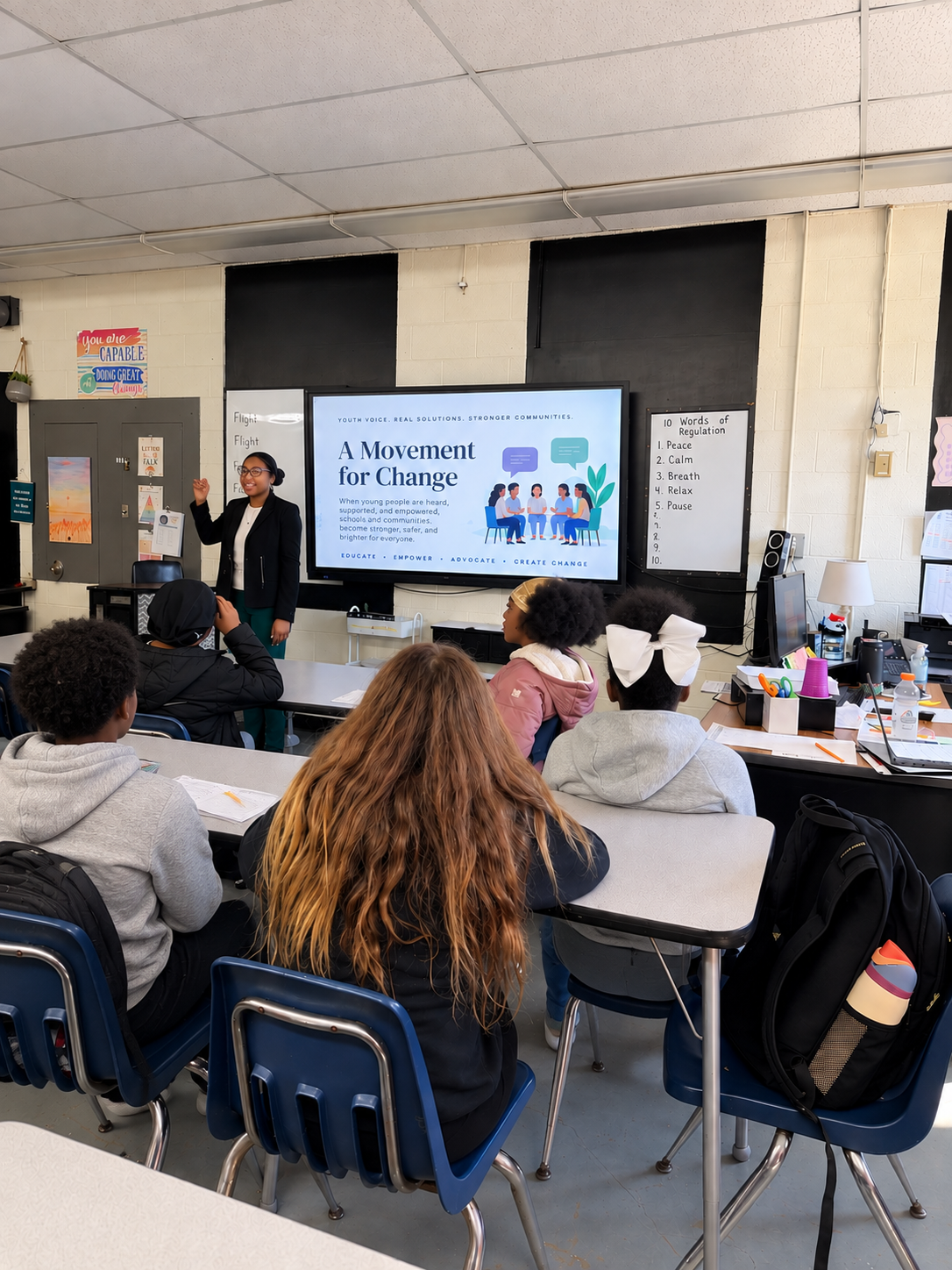
Our bespoke K–12 R³ Curriculum helps young people better understand the connection between emotions, the nervous system, and behavior. Rather than focusing solely on what a young person is doing, R³ creates opportunities to explore what may be driving the response and develop healthier ways to externally process complex emotions.
Through somatic body-based practices, creative arts experiences, cognitive reframing, safe social connection, and project-based workshops, our supplemental curriculum is designed to integrate into initiatives schools and youth-serving organizations already have in place.
The goal is bigger than behavior change.
We help young people distinguish between the dangers of yesterday and the possibilities of tomorrow—building the self-regulation, relationships, critical-thinking skills, and sense of agency needed to pursue new opportunities.
By connecting emotional and relational development with purposeful learning, career exploration, and pathways into S.T.E.M. and S.T.E.A.M., R³ works toward a larger outcome: interrupting cycles of intergenerational trauma while building capacity for long-term economic mobility.

REGULATE:
Self-regulation is the ability to autonomously maintain our emotional state, thoughts, and behaviors.
The ability to calm ourselves during high-pressure situations and create an internal safe space—a quiet space where we can pause and recognize potentially negative reactions that might be surfacing in our own psyche—is a vital 21st-century skill.
Psychological safety occurs when we have been taught, and then empowered, to remind ourselves we can come back to our baseline again and again, strengthening our capacity to self-regulate. Without that ability, we are under constant threat of negating our own potential.
RELATE:
Humans are hardwired to be a social species—we long for connection to others.
“Most people are not struggling because they can’t figure out the answer to a technical question—they are struggling because they can’t figure out how to get along with their kids, their parents, their spouses, their siblings, their neighbors, or their coworkers.” — Liz Mineo
Recognizing when someone is upset, even if they haven’t verbalized it, is an important skill.
At Michale Taylor & Associates, we integrate activities and modalities designed to teach participants how to read body language, tonality, facial expressions, and other cues. We also include sessions on how students can respond to those signs of distress in others empathetically.
“Once we understand ourselves, we can begin building stronger, healthier connections with others. Healing happens in healthy relationships.” — Michale Taylor
R.I.S.E.:
Michale Taylor & Associates is proud to present our extended programming initiative designed exclusively for schools and other organizations that need transformative in-person, non-clinical, direct support. Partners share our goal to offer real, tangible support to student populations who need targeted intervention for mental health and/or behavioral health issues.
Regulate to restore emotional stability
Implement intentional decision-making skill sets
Self-reflect and
Evolve moment by moment—
So they can RISE!
Systemic barriers like funding disparities, bias, underrepresentation, and ableism can intersect with Intergenerational trauma and shape how students perceive their lives.
Intergenerational trauma can carry the emotional and psychological effects of adversity from one generation to the next. Early family and community relationships form attachment patterns and emotional memories that influence how we respond to stress, relationships, conflict, and perceived threats later in life. Sometimes, the body learns to protect itself in one environment and continues using those same protective responses long after the environment has changed.
That is where R³ begins.
Our bespoke K–12 R³ curriculum helps young people better understand the connection between emotions, the nervous system, and behavior. Rather than focusing solely on what a young person is doing, R³ creates opportunities to explore what may be driving the response and develop healthier ways to externally process complex emotions.
Through somatic body-based practices, creative arts experiences, cognitive reframing, safe social connection, and project-based workshops, our supplemental curriculum is designed to integrate into initiatives schools and youth-serving organizations already have in place.
The goal is bigger than behavior change.
We help young people distinguish between the dangers of yesterday and the possibilities of tomorrow—building the self-regulation, relationships, critical-thinking skills, and sense of agency needed to pursue new opportunities.
By connecting emotional and relational development with purposeful learning, career exploration, and pathways into S.T.E.M. and S.T.E.A.M., R³ works toward a larger outcome: interrupting cycles of intergenerational trauma while building capacity for long-term economic mobility.