
Blog
- January 27 2026
- Michale Taylor
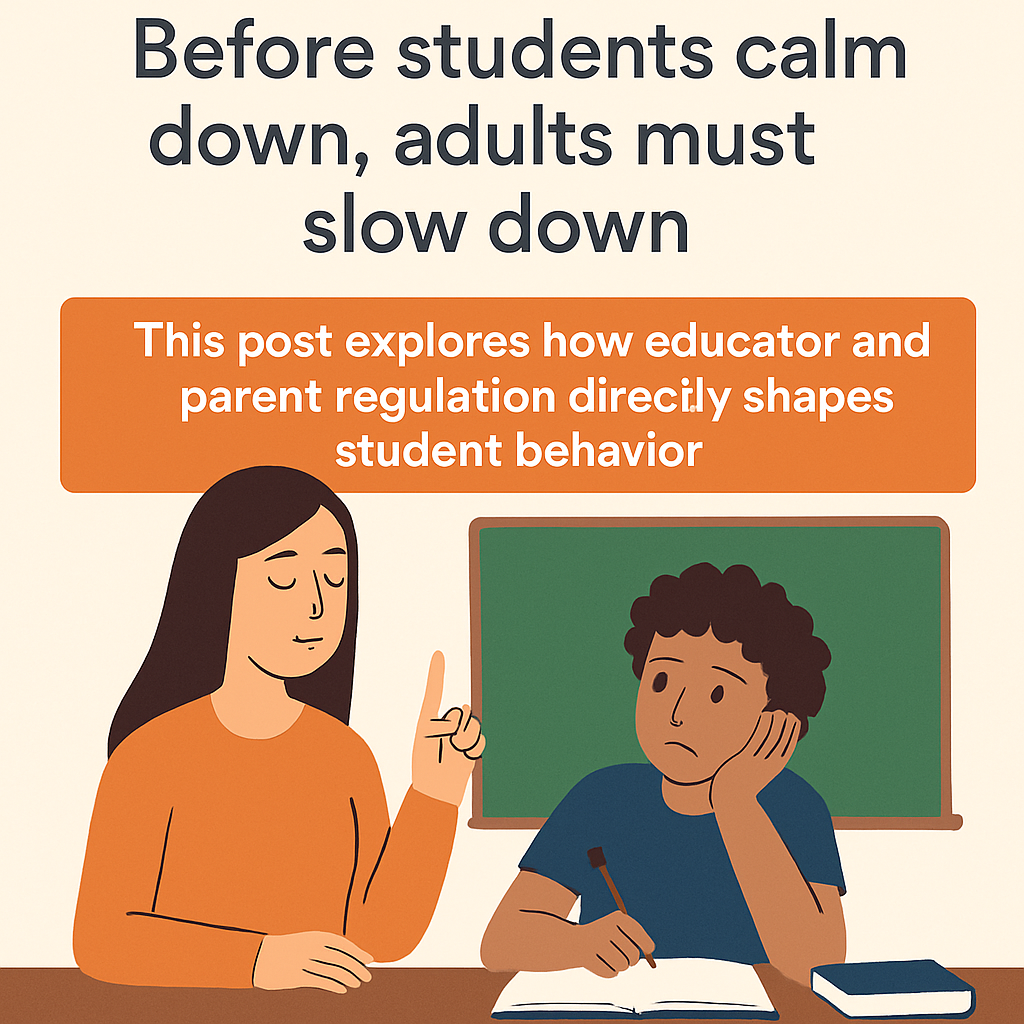
The Adult Nervous System Sets the Tone
Why Educator and Parent Regulation Matters Most
Before a word is spoken.
Before a rule is enforced.
Before a consequence is given.
Your nervous system speaks first.
Students don’t just listen to what adults say they feel how adults show up. Tone, posture, facial expression, and pace all communicate safety or threat long before language lands.
This is why adult regulation matters more than we often realize.
Nervous Systems Sync Before Words Do
Human nervous systems are wired for connection. Students subconsciously read the emotional state of the adults around them and adjust their own accordingly.
A regulated adult can help settle a dysregulated student.
A stressed adult can unintentionally escalate the room.
This isn’t about perfection. It’s about awareness.
When adults slow their breath, soften their tone, and ground their bodies, students feel it—even if they can’t name it.
Why “Calm Down” Rarely Works
Telling a student to calm down assumes they have access to calm in that moment.
But if the adult delivering the message is tense, rushed, or reactive, the student’s nervous system receives mixed signals.
The body responds to energy, not instructions.
Calm isn’t contagious through words.
It’s contagious through presence.
Regulating in the Moment (Realistic, Not Perfect)
Adult regulation doesn’t require silence, meditation, or stepping away for long periods of time. It requires small, intentional pauses.
In the moment, adults can:
-
*Slow their breathing
-
*Lower their voice
-
*Plant their feet and soften their shoulders
-
*Pause before responding
-
*Name what they’re feeling without blaming
These micro-regulation strategies create space for students to settle as well.
Modeling Emotional Safety and Repair
Students learn regulation by watching it lived out.
When adults:
-
*Acknowledge mistakes
-
*Repair after conflict
-
*Apologize without defensiveness
-
*Regulate before re-engaging
They teach students that emotions are manageable and relationships are safe.
Repair is one of the most powerful regulation tools we have.
Takeaway
Regulated adults create regulated environments.
When adults tend to their own nervous systems, they give students permission—and pathways—to do the same.
You don’t have to be calm all the time—just willing to regulate.
🎯 This week, notice how your tone and body language shift a student’s response.
📩 Subscribe to the Rise Blog for strategies that support adult and student regulation together.
Leave Your Comment
Many desktop publish packages web page editors now use model text
search for sites their infancy.